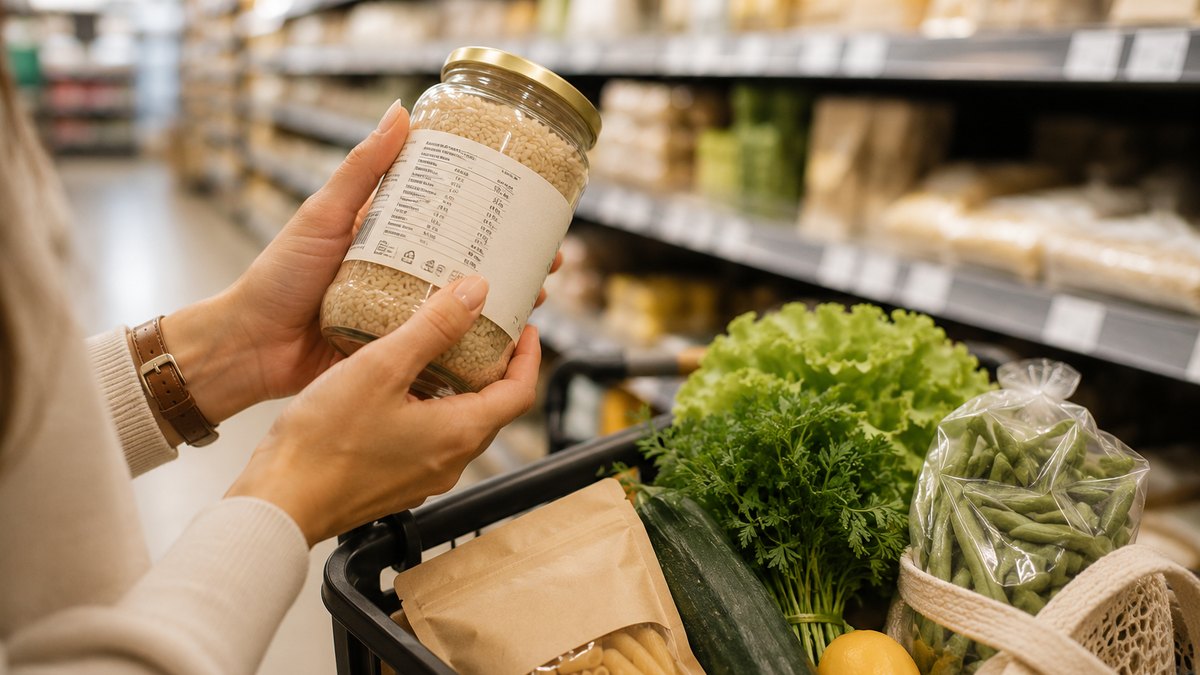
In short: my 10-second label system is: check how long the ingredient list is (shorter is better), scan for my usual triggers (aged, fermented, smoked, vinegar, yeast extract, flavourings, preservatives), be wary of very long shelf lives, and prefer fewer additives. My golden rule: if my grandmother wouldn't recognise the ingredients, it's probably not for me.
What do I look at, in order?
- The ingredient list — how long is it? The shorter, the better. Mile-long lists usually mean lots of things to avoid.
- I scan for my usual triggers: aged, fermented, smoked, vinegar, yeast extract, flavourings, preservatives.
- "Fresh" or "long shelf life"? Products with a very long use-by date are often heavily processed.
- Fewer additives = better. Not every additive is a problem, but a lot of them together can be.
My golden rule when shopping: if my grandmother wouldn't recognise the ingredients, it's probably not for me.
With a bit of practice it becomes second nature — and grocery shopping feels relaxed again.
A practical trick: I take a photo of the label of any product I tolerate well and build up a little "safe" album on my phone. At the shop, instead of reading everything from scratch, I do a quick check to see if I recognise something I already know — it saves me time and stress.