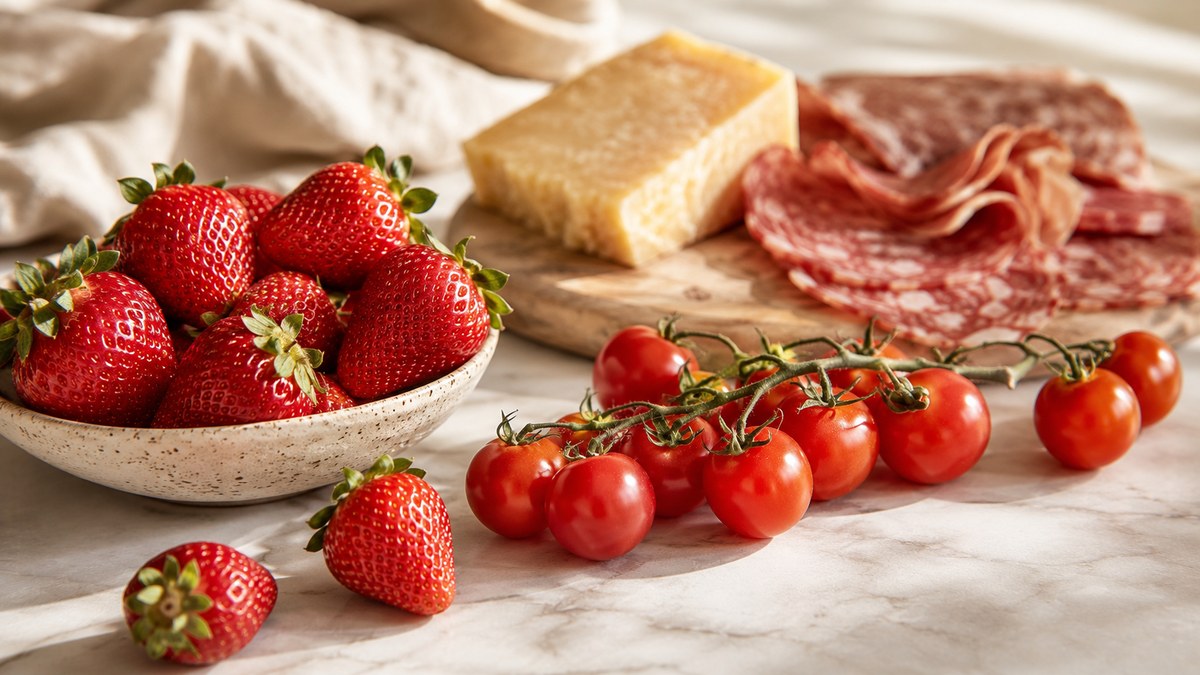
In short: some foods contain ready-made histamine (aged, fermented, preserved ones), while others — strawberries, tomatoes, citrus, chocolate — contain almost none but trigger the release of your own histamine. Both fill the same "bucket". That's why you can react to foods that look "clean" on paper.
For a long time I read lists of "high-histamine foods", avoided them religiously — and still reacted to things that weren't on any list. It took me months to understand why. The answer was the most useful "aha" of my whole journey with histamine intolerance: problem foods come in two kinds, not one.
1. Foods that contain histamine
These bring histamine ready-made onto your plate. The more "aged", matured or fermented a food is, the more it has:
- Aged cheeses
- Cured meats, salami, ham
- Canned or stored fish (canned tuna is among the highest)
- Fermented foods: pickles, sauerkraut, soy sauce
- Wine, beer, fermented drinks
- Yesterday's leftovers — histamine rises as food sits
The logic here is simple: you eat them, you add histamine to the "bucket".
2. Foods that release histamine
And here's the part almost no one explains. Some foods contain almost no histamine — but they trigger your body to release your own histamine, the kind you already have stored. They're called "histamine liberators":
- Strawberries
- Tomatoes
- Citrus
- Chocolate
- Pineapple
On paper, they're "clean". In the body, they can fill your bucket just as well as a slice of aged cheese.
Why it matters (and why general lists confuse you)
If you only look at how much a food contains, you miss half the story. That's why you can react to a tomato and strawberry salad — a "healthy" dish with nothing aged in it — and have no idea what you did wrong.
And it's why the lists copied all over the internet so often fail: they mix the two categories, lump everything together, and leave you with the impression that "you can't have anything anymore", without explaining why.
What I do
I don't try to memorise perfect lists. Instead:
- I keep a simple journal — what I ate, how I felt, sleep, stress, the day of my cycle. After a few weeks, my patterns surface on their own.
- I look at both categories, not just "how much it has".
- I keep the bucket in mind: no single food is "the culprit" — it's the sum of everything that has piled up.
The goal isn't a perfect list. It's to know your own body — because, in the end, that's the only list that truly matters.