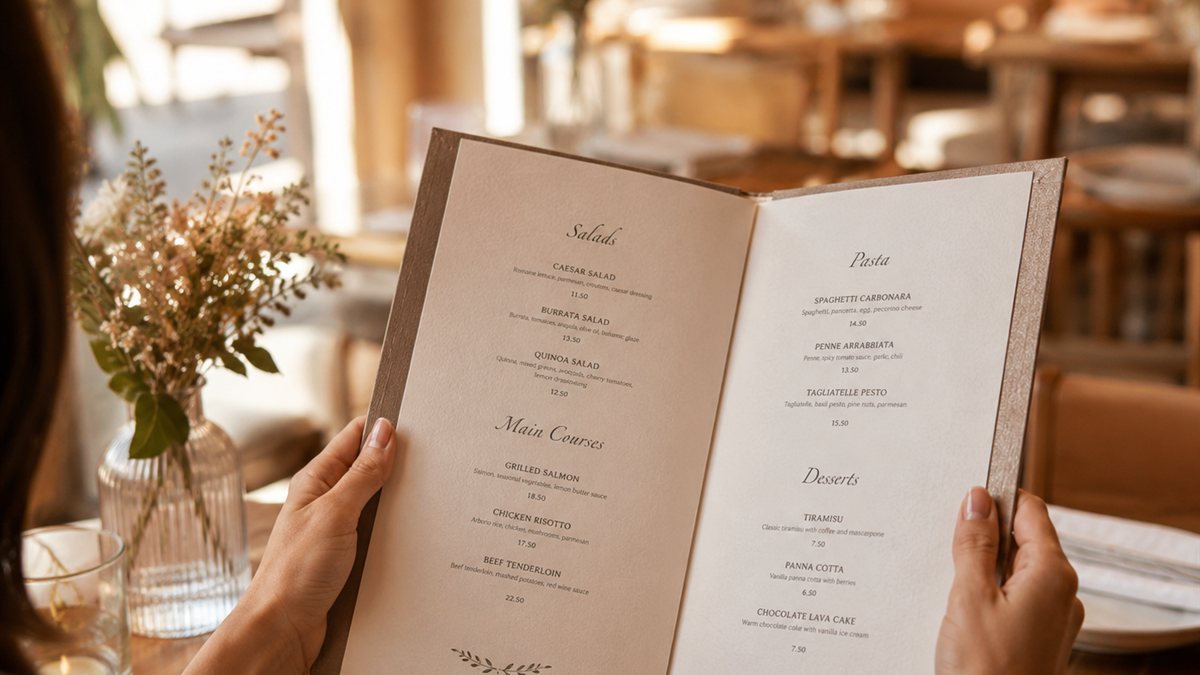
In short: eating out with HIT got calmer once I started choosing the restaurant (fresh, cooked-to-order food), scanning the menu for words like aged, smoked, marinated or fermented, and asking short, simple questions. On sensitive days I fall back on a basic "safe" order — plainly cooked meat or fish, a neutral side, fresh vegetables, still water — and I remember that sleep, stress and the time of the month change how much I can handle.
Before I get into the details, something important: I'm not a doctor, and every body is different. What I write below is what works for me. You know your own triggers best — use this list as a starting point, not a universal rule.
1. Why do I choose the restaurant, not just the dish?
What matters most is how fresh the food is. Histamine builds up over time, so a place that cooks to order from fresh ingredients is almost always a better bet than one with lots of dishes that have been sitting, marinated or reheated.
I look for places that make simple, "home-style" food with a short menu. Huge menus with dozens of dishes usually mean a lot of ingredients prepped well in advance.
2. What keywords do I scan the menu for?
Some words make me pay attention. I don't avoid them automatically, but I ask a few more questions:
- Aged, smoked, marinated, fermented — aged cheeses, cured meats, smoked fish, pickles, soy sauce. These are usually high in histamine.
- Tomatoes, spinach, eggplant, avocado — foods that trigger reactions for a lot of people.
- Ready-made "house" sauces — I ask whether they're fresh or have been sitting for a few days.
3. What questions do I ask, without embarrassment?
I've learned to ask short and clear questions, without launching into long medical explanations:
"Is this dish cooked fresh, to order? Could I have it without the sauce, just with olive oil and salt?"
Most of the time, the kitchen staff are kinder than I expected. A simple option — a piece of meat or fish cooked plainly, with a side of rice or potatoes and fresh vegetables — is almost always doable.
4. What's my basic "safe" order?
When I'm tired or it's a more sensitive day, I stop experimenting. I go with what I know:
- Fresh white meat or white fish, cooked simply (grilled or baked)
- A neutral side: rice, potatoes, plain pasta
- Fresh vegetables, boiled or steamed
- To drink: still water. Alcohol is, for me, almost always a problem.
5. Why do I never forget the context?
How I react isn't only about what's on the plate. If I slept badly, if I'm stressed or if it's a certain time of the month, I'm more sensitive — and then I keep it even simpler. Less is better on the hard days.
Eating out is no longer a source of anxiety for me. It comes down to a few good questions and choices I make more and more easily, with practice.
What trick makes my evening easier?
If I know where I'm going ahead of time, I look at the menu online from home and quietly pick one or two safe options. That way, at the table, I don't feel the pressure to decide on the spot with everyone looking at me. And if the place doesn't have its menu online, I make a quick call and ask — most of the time they're more open than I expected, especially if I ask for something simple, cooked to order.